Port Tobelo
- North Maluku


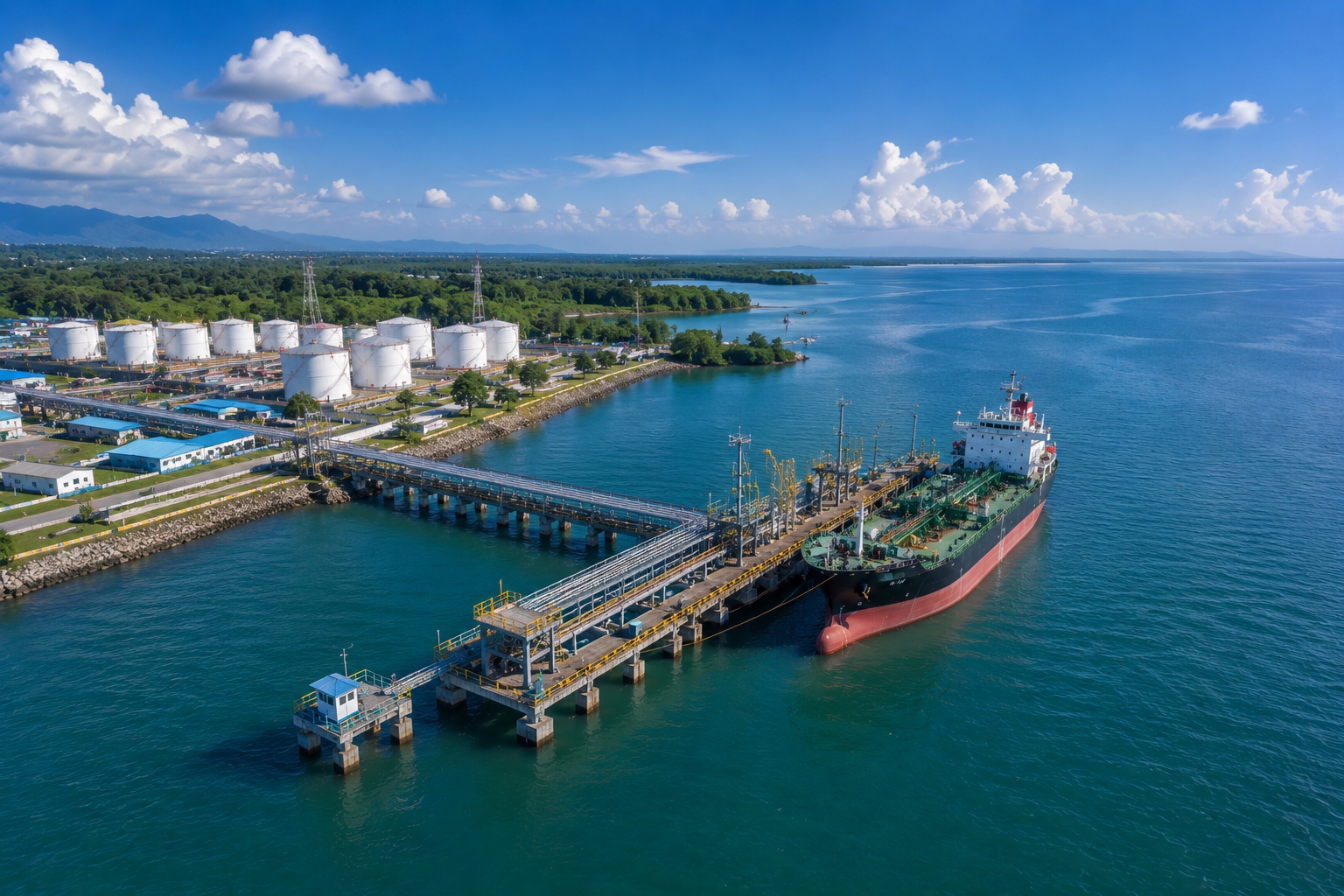
PT Pertamina Fuel Terminal (FT) Sei Siak is a fuel terminal located in Pekanbaru City, Riau Province. This terminal serves as one of Pertamina's strategic facilities supporting energy distribution to the Riau region and its surroundings.


Fuel Terminal Sei Siak

2 Operational Jetties

24 Hours Operation

Min/Max 1.000 - 2.500 DWT, Min/Max LOA 50 - 80 m

GMT +7 (WIB)
The Sei Siak Fuel Terminal is a fuel distribution terminal owned by PT Pertamina and plays a vital role in supporting energy security in Riau Province. The terminal is equipped with two main jetties, a mooring area (Beringin Inner Bar), small boat facilities (LLP), a navigation system, firefighting facilities, and oil spill response equipment.
Infrastructure & Storage Facilities:
Marine & Navigation Services:
Cargo Handling Equipment:
Safety, Emergency, & HSSE Systems:
Security & Environmental Protection:
Cargo Handled:
All personnel are required to use complete PPE while in the terminal operational area, including: Safety Helmet, Safety Shoes, Work Vest, Wearpack, ID Card
Smoking, carrying sources of fire, and carrying out hot work are prohibited in the terminal operational area unless an official permit (Permit to Work) has been obtained from the terminal.
All vessels are required to complete the Ship/Shore Safety Checklist (SSSCL) before loading and unloading activities begin. The inspection covers vessel readiness, communication systems, safety equipment, grounding systems, hose connections, and emergency procedures.
All vessels are required to comply with Marine Pollution Prevention procedures. Discharge of oil, sludge, ballast, waste, or garbage into the sea is prohibited. Any oil spill must be immediately reported to the Terminal Representative and handled using Oil Spill Response Equipment (OSRE) in accordance with emergency response procedures.
During berthing and loading and unloading activities, operational communication is carried out using Marine VHF Radio which is always active between the ship, Terminal Representative, and pilot officer.
All docking operations at Conventional Buoy Mooring (CBM) must follow the instructions of the Pilot, KSOP, and Terminal Representative. The mooring arrangement must be secured before cargo transfer begins.